Maywood Mutual Water Co #1 is committed to ensuring the distribution of a safe and potable water supply to all water users. Cross Connection Control Program has been established by Maywood Mutual Water Co #1 and was adopted in accordance with the State Water Resource Board, Cross Connection Control Program Handbook.
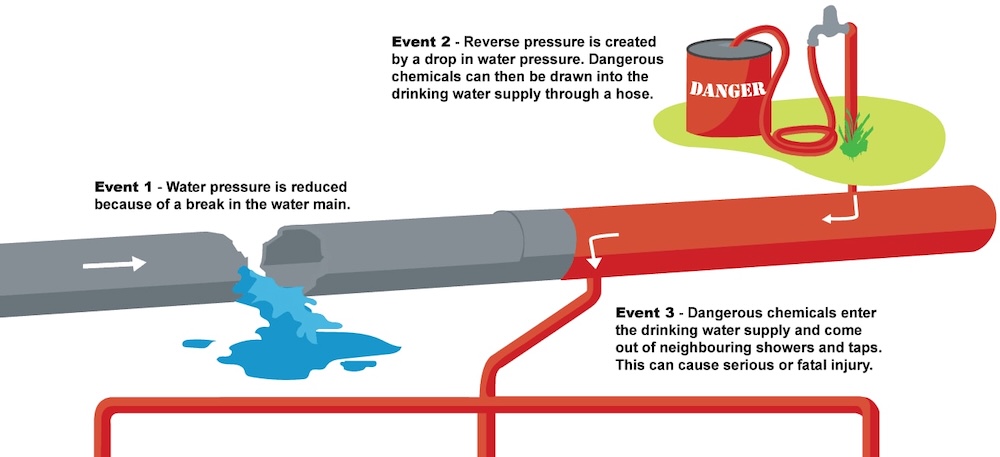
Water systems rely on pressure to keep water flowing in the correct direction which is from the system to customer. However, backflow can occur when there is a significant drop in water pressure on the water purveyor’s sides such as during a main break or when a fire hydrant is damaged. When this happens, it becomes possible for used or polluted water from a customer’s plumbing system to flow back into the public water supply. This is an undesirable situation for all parties. Thus, a cross-connection control plan has been established to prevent this from occurring.
PROGRAM GOALS
- Inform property owners about the Cross-Connection Control Program.
- Identify cross-connections where potential contamination of drinking water may occur and mandate that a suitable backflow prevention device is installed.
- Comply with testing requirements on a yearly basis or more frequently, depending on the hazard.
PROGRAM REQUIREMENTS
Property owners must complete the following:
- Complete a cross-connection control survey
- Testing and inspection of their backflow preventers by certified testers (at the owner’s expense).
- Installation upgrades, replacement, or repairs of any required backflow preventers by certified installers or plumbers (at the owner’s expense).
WHAT IS A CROSS-CONNECTION SURVEY?
A cross-connection survey is an assessment of your building/property will determine the degree of hazard (high or low) based on an inspection of water uses and existing backflow protection. Once the survey is completed, the need for backflow prevention will be determined and may require the installation of a backflow assembly at the meter. The degree of hazard determines the type of backflow prevention assembly required.
Q: WHAT IS CROSS CONNECTION?
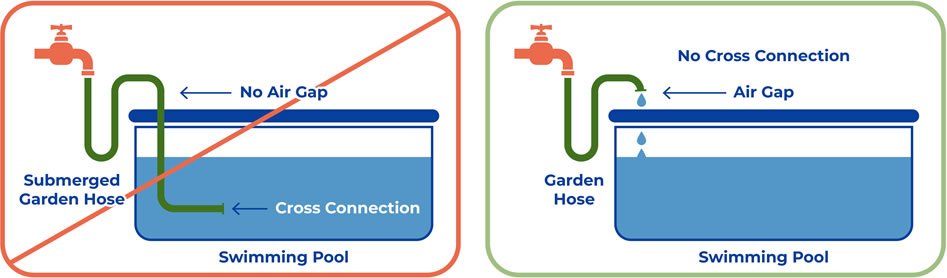
A cross connection is any actual or potential connection between a public or consumer’s potable water system and any non-potable substances. This connection allows the possibility for used water, industrial fluids, gases, or other substances to enter the potable water system.
For example, a hose submerged in a sink or container full of dirty water or chemicals, under the right circumstances, could draw the water from the sink or container back into drinking water system.
TYPICAL CROSS-CONNECTIONS
- Auxiliary water supplies
- Boilers
- Cooling towers and chillers
- Fire sprinkler systems
- Industrial fluid systems and compressors
- Laboratory equipment (such as medical and industrial)
- Lawn irrigation and sprinkler systems
- Processing tanks
- Solar heating systems
- Standpipe systems
- Swimming pools
- Wash basins and service sinks
- Water re-circulating systems
Q: WHAT IS BACKFLOW?
Backflow is the undesirable reversal of flow of water into a water system. This occurs when water or mixtures and other substances flow back into the potable water supply. This could lead to potential contamination or polluted water supply.
Causes of Backflow:
- Back pressure: Any elevation of pressure in the downstream piping system (by pump, elevation of piping, steam pressure, air pressure, etc.) above the supply pressure at the point of consideration, which would cause or tend to cause a reversal of the normal direction of flow.
- Back siphonage: A form of backflow due to a reduction in system pressure, which causes a sub-atmospheric pressure to exist in the water system.
Q: WHAT IS A BACKFLOW PREVENTION ASSEMBLY?
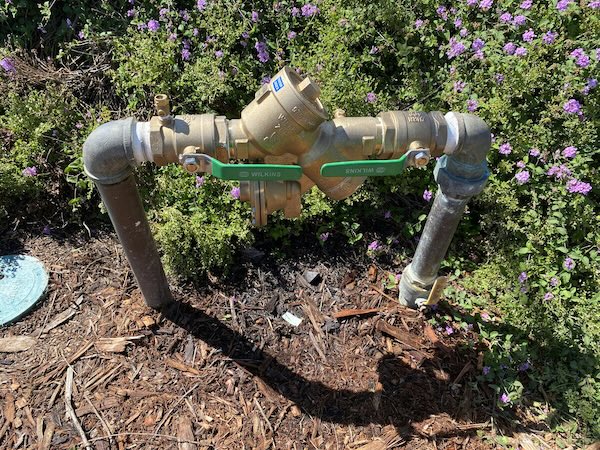
A backflow prevention assembly is a device or mechanism designed to prevent contaminated water from flowing backwards into a potable water supply.
Q: WHAT TYPES OF BACKFLOW PREVENTION ASSEMBLIES ARE THERE?
- Reduced Pressure Principle Backflow Prevention Assembly (RP)
- Double Check Valve Assembly (DC)
- Pressure Vacuum Breaker Assembly (PVB)
The appropriate assembly depends on the degree of hazard and the type of service or property. MMWCO #1 will determine the type of assembly required.
Q: WHOSE RESPONSIBILITY IS IT TO MAINTAIN A BACKFLOW PREVENTION ASSEMBLY?
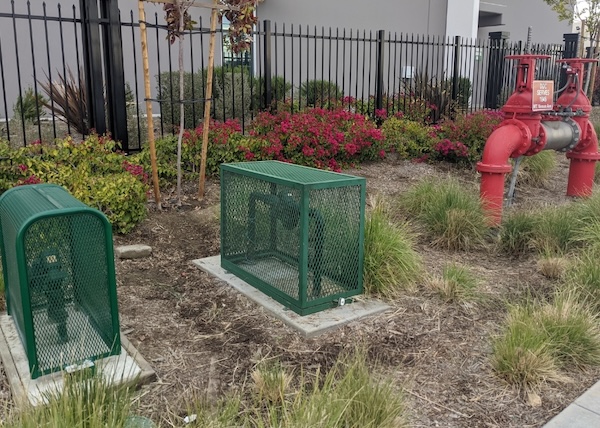
Backflow assemblies are a part of the customers’ water system. MMWCO #1 maintains the water line up to the water meter. All pipes, fixtures, etc., beyond the meter are the property owner’s responsibility, this includes the testing and maintenance of the backflow assembly.
Q: WHY DO I NEED TO INSTALL A BACKFLOW PREVENTION ASSEMBLY?
In accordance with the U.S. Environmental Protection Agency’s Safe Drinking Water Act, the California Department of Public Health, and the Uniform Plumbing Code, all sites with cross-connections are required to be equipped with a backflow prevention assembly. MMWCO #1 has adopted policies and procedures to ensure compliance with these regulations and to protect the public water system. Only USC Approved Backflow Prevention Assemblies are allowed to be installed on the service line. No exceptions will be made.
Q: WHY DO I HAVE TO TEST MY BACKFLOW PREVENTION ASSEMBLY EVERY YEAR?
Backflow assembly testing needs to be done annually to ensure backflow assemblies are working properly. MMWCO #1 will notify the customer that the assembly needs to be tested. The customer will then contact a backflow tester certified by Los Angeles County and complete the testing.
Q: MY BACKFLOW PREVENTION ASSEMBLY WAS TESTED LESS THAN A YEAR AGO. WHY DO I HAVE TO RETEST?
In order to comply with regulations, backflow prevention assemblies are required to be tested when installed, if repaired or moved, on a designated yearly schedule. If the assembly yearly testing date is in March, but the device is not tested until June, the date for testing the next year REMAINS in March, not June. Additionally, if the assembly is tested in March, but is relocated in September, the assembly will need to be re-tested for its new location AND re-tested on its scheduled testing date in March.
RESOURCES
- USC Foundation for Cross-Connection Control and Hydraulic Research: List of Approved Backflow Prevention Assemblies: https://fccchr.usc.edu/list.html
- California Code of Regulations Title 17
- California State Water Resources Control Board Cross-Connection Control Policy Handbook:
https://www.waterboards.ca.gov/drinking_water/certlic/drinkingwater/cccph.html
QUESTIONS RELATING TO BACKFLOW PREVENTION
Please call our office (323) 560-2439 or email us at crossconnection@mmwco1.com